Chancellor Weighs Increase in Machine Games Duty on Category B Slots Before October Budget
Written by Ulrich Koch · Sep 10, 2026

Chancellor Weighs Increase in Machine Games Duty on Category B Slots Before October Budget
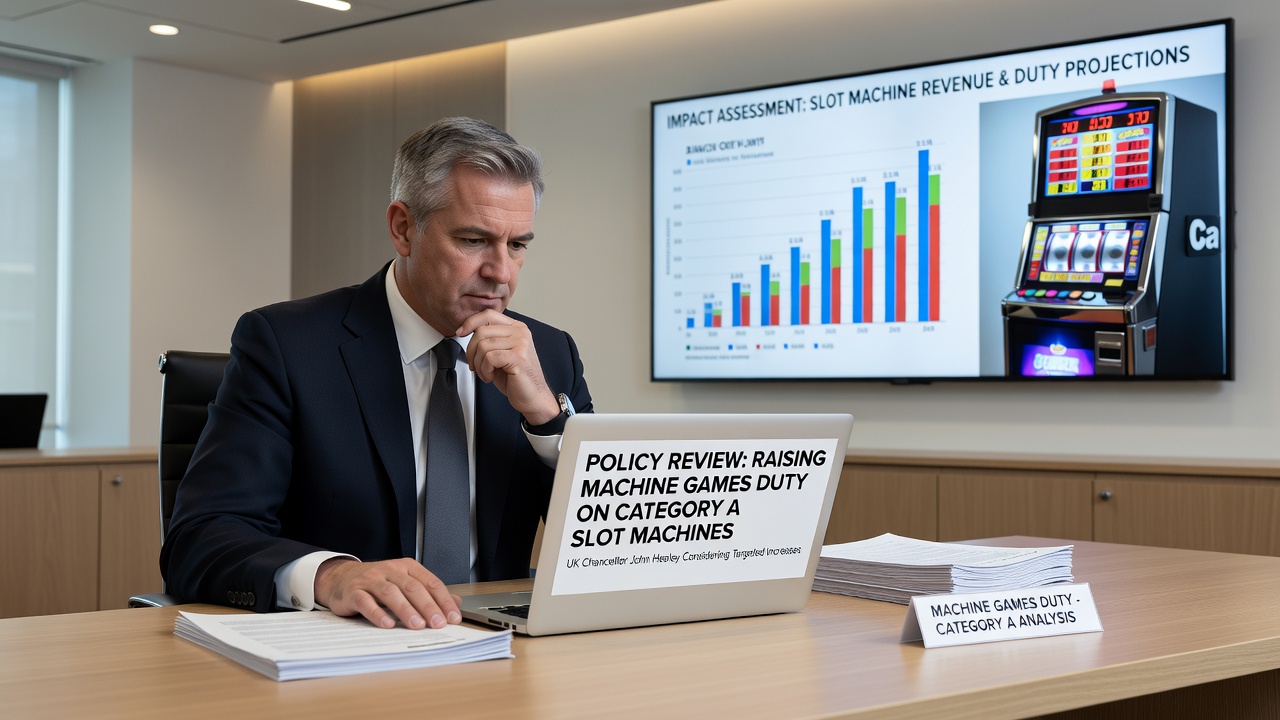
Reports from early September 2026 indicate that UK Chancellor John Healey is examining an increase in Machine Games Duty applied to Category B slot machines as one option ahead of the government's October 28 budget statement, and the move comes at a time when public finances remain under pressure with limited room for additional revenue measures. The consideration follows earlier analysis from the Social Market Foundation think tank that examined the possibility of raising the current 20 percent rate, and officials are now assessing how such an adjustment might fit into broader fiscal planning without triggering wider economic side effects.
Details of the Proposed Tax Adjustment
Category B machines, which include the majority of slot terminals found in high-street betting shops, currently attract Machine Games Duty at 20 percent of gross gaming yield, yet the Social Market Foundation has previously put forward the case for lifting that rate toward 40 percent in order to close revenue gaps. Under the scenario under review, the higher duty would apply specifically to these machines while leaving other gaming categories untouched for the time being, and the Treasury has not yet confirmed whether the change would take effect immediately after the budget or be phased in over subsequent months. Data compiled by government statisticians show that Category B machines generate a substantial share of total gaming duty receipts, which explains why any rate adjustment attracts attention from both revenue forecasters and industry analysts.
Industry Response and Warnings Issued
The Betting and Gaming Council has responded by highlighting the risk of accelerated betting-shop closures should the duty rise, and the organization points out that several hundred outlets have already shut in recent years amid rising operating costs and changing consumer habits. Council representatives argue that further tax pressure would reduce the number of viable locations still further, leading to direct job losses in retail betting and potentially pushing some players toward unregulated alternatives. Figures released by the council earlier this year indicated that each closed shop removes a number of full-time and part-time positions from local economies, while also reducing the number of supervised environments where age verification and responsible gambling tools are in place.
Context Within Current Public Finances
Public sector borrowing figures published over the summer of 2026 revealed that the government continues to face tight fiscal headroom, and ministers have been tasked with identifying measures that can deliver additional receipts without requiring primary legislation or new spending programs. Raising an existing duty such as Machine Games Duty offers one route that can be implemented through the budget process itself, and Treasury officials have been reviewing yield projections under different rate scenarios to determine the net benefit after accounting for any behavioral responses from operators and players. The October 28 date has been circled as the point at which any final decision will be announced, giving the chancellor time to weigh submissions from both industry bodies and independent fiscal experts before committing to a specific figure.
Potential Market and Regulatory Implications
Operators of Category B machines have already begun modeling the impact of a rate increase on their margins, and some have indicated that locations with lower footfall could become unprofitable if the duty moves significantly higher. The Betting and Gaming Council has also noted that any shift in the balance between taxed and untaxed gambling channels carries enforcement challenges, since players who migrate to illegal platforms fall outside the existing regulatory framework that includes customer protections and taxation. Licensing authorities continue to monitor compliance rates across the legal sector, yet the council maintains that higher duties could erode teh commercial viability of supervised venues faster than enforcement resources can adapt to new unregulated supply.
Conclusion
The decision facing Chancellor Healey centers on balancing immediate revenue needs against longer-term consequences for the regulated betting sector, and the October 28 budget will reveal whether the proposed adjustment to Machine Games Duty on Category B machines moves from consideration to implementation. Industry groups and fiscal analysts alike will be watching the final wording of the budget resolution to assess how the change, if adopted, alters operating conditions for the remaining high-street outlets and the broader gaming market.