Regulatory Changes Alter RNG Certification Dynamics for Multi-Game Digital Platforms
Written by Ulrich Koch · Aug 23, 2026
Regulatory Changes Alter RNG Certification Dynamics for Multi-Game Digital Platforms
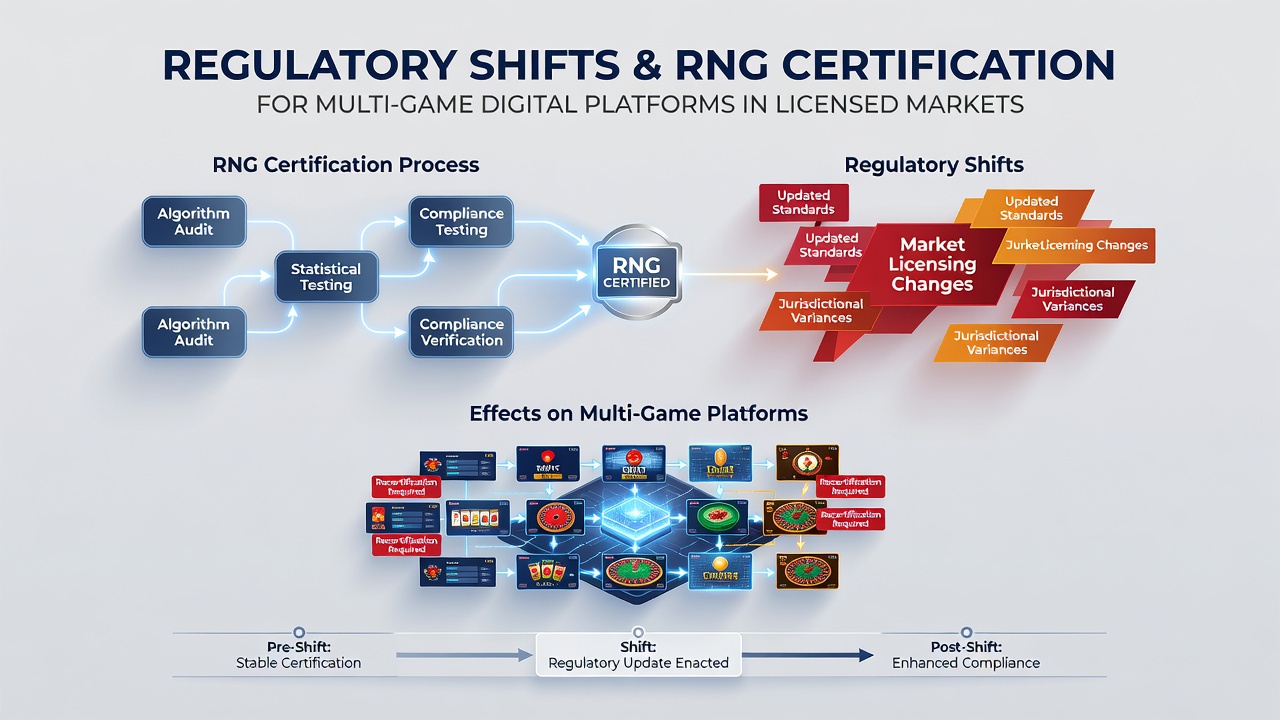
Regulatory bodies across licensed markets continue to refine standards for random number generator testing, and these adjustments directly influence how multi-game digital platforms achieve certification. Operators managing platforms that host slots, table games, and live dealer options must navigate updated protocols that emphasize transparency, audit frequency, and cross-jurisdictional compatibility. Data from various gaming control agencies shows that certification timelines have extended in several regions since 2024, primarily because new guidelines require additional statistical analysis and real-time monitoring capabilities.
Key Shifts in RNG Testing Requirements
Multiple jurisdictions introduced revised RNG evaluation frameworks during 2025 that mandate more rigorous entropy assessments and hardware-software integration checks. These updates emerged after industry reports highlighted inconsistencies in older testing methodologies when applied to platforms offering dozens of simultaneous game types. Certification labs now evaluate RNG outputs across different game categories within a single platform rather than isolating each title, which streamlines some processes while demanding broader validation scopes.
Observers note that multi-game environments create unique challenges because a shared RNG core must demonstrate fairness across varying payout structures and volatility levels. Regulatory updates in North America and parts of Europe reflect this reality by requiring platform-level submissions that include detailed mapping of RNG usage per game module. Platforms that previously certified individual titles separately now face consolidated reviews that examine the underlying generator once but verify its application across every integrated game.
Impact on Multi-Game Platform Operators
Operators report that certification costs have risen as testing bodies implement new sampling requirements and extended observation periods. A single multi-game platform may undergo weeks of continuous RNG output monitoring before approval, particularly when games incorporate bonus features or progressive elements that depend on the same generator. This approach ensures consistent randomness but extends the window between development completion and market launch.
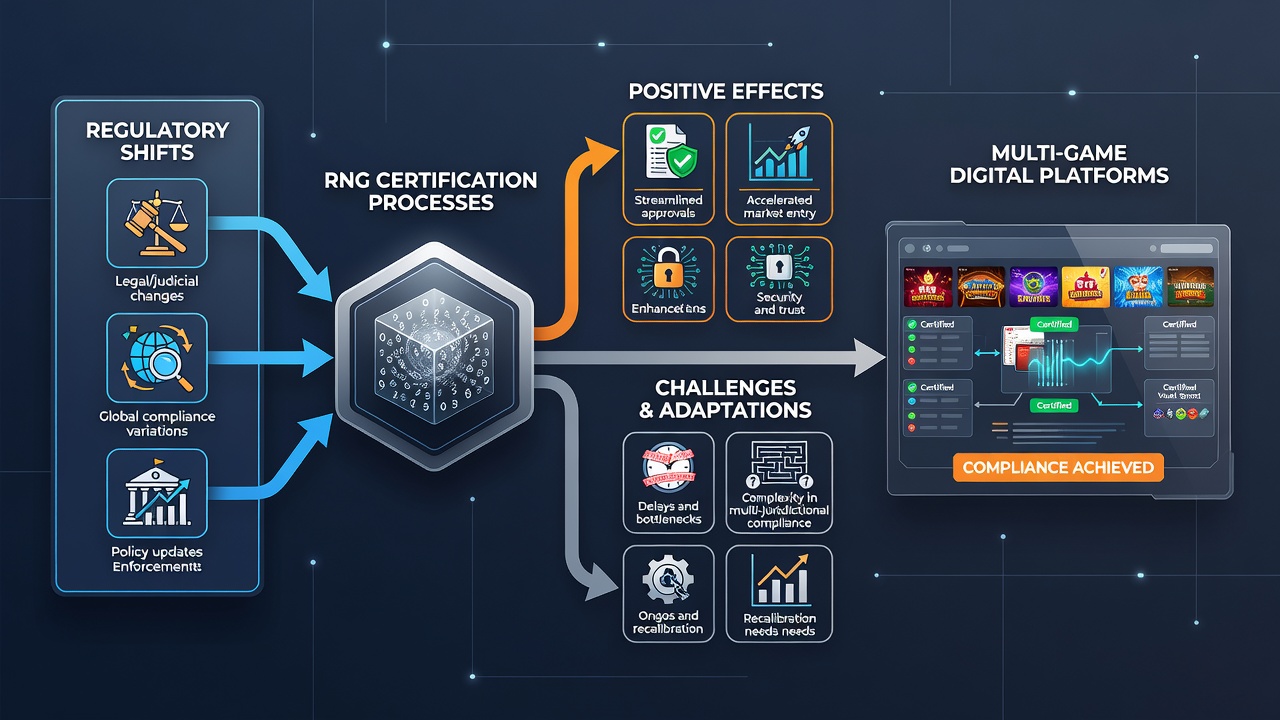
Platforms operating across several licensed markets encounter additional layers of complexity because each jurisdiction applies its own weighting to different aspects of RNG performance. One market might prioritize long-sequence testing while another focuses on hardware security modules. Those who've studied these variations observe that operators increasingly maintain separate compliance teams or external consultants who track evolving rules in real time. The result appears in delayed rollouts when a platform update triggers re-certification across multiple regions simultaneously.
Regional Variations Emerging in 2025-2026
North American regulators, including those in New Jersey and Nevada, have aligned certain RNG documentation standards with international testing protocols to reduce duplication. According to information from the New Jersey Division of Gaming Enforcement, updated submission templates now require explicit declarations regarding RNG source code access and version control. European markets continue separate harmonization efforts through national authorities that reference broader EU directives on digital services.
By August 2026 several jurisdictions plan to enforce enhanced live monitoring standards that connect certified RNG systems directly to regulatory dashboards. These connections allow continuous statistical sampling without requiring full re-submission for minor game additions. Platforms that adopt compatible APIs early gain smoother pathways through subsequent certification cycles, while those relying on legacy architectures face more extensive manual reviews.
Technical Adaptations Required
Developers respond to these regulatory movements by embedding modular RNG architectures that isolate core generation functions from game-specific logic. Such designs permit targeted audits when individual titles receive updates rather than requiring complete platform re-evaluation. Research from academic and industry sources, including reports published through the European Gaming and Betting Association, indicates that modular approaches reduce average certification time by approximately 30 percent in jurisdictions that accept component-based testing.
Security considerations also receive renewed attention because multi-game platforms often store RNG seeds and state information across distributed servers. Updated guidelines specify encryption standards and access logging that certification labs verify during on-site or remote audits. Platforms must demonstrate that any game addition cannot compromise the integrity of previously certified RNG outputs.
Conclusion
Regulatory evolution continues to reshape RNG certification for multi-game digital platforms by emphasizing integrated testing, cross-market compatibility, and ongoing monitoring capabilities. Licensed operators adapt through architectural changes and dedicated compliance resources that address jurisdiction-specific requirements. As August 2026 approaches, platforms that align early with emerging live-monitoring expectations position themselves for more efficient certification cycles while maintaining the statistical integrity demanded by regulators across licensed markets.